
Last updated November 14, 2026
 Sweep & inspection
 Caps & crowns
 Flue relining
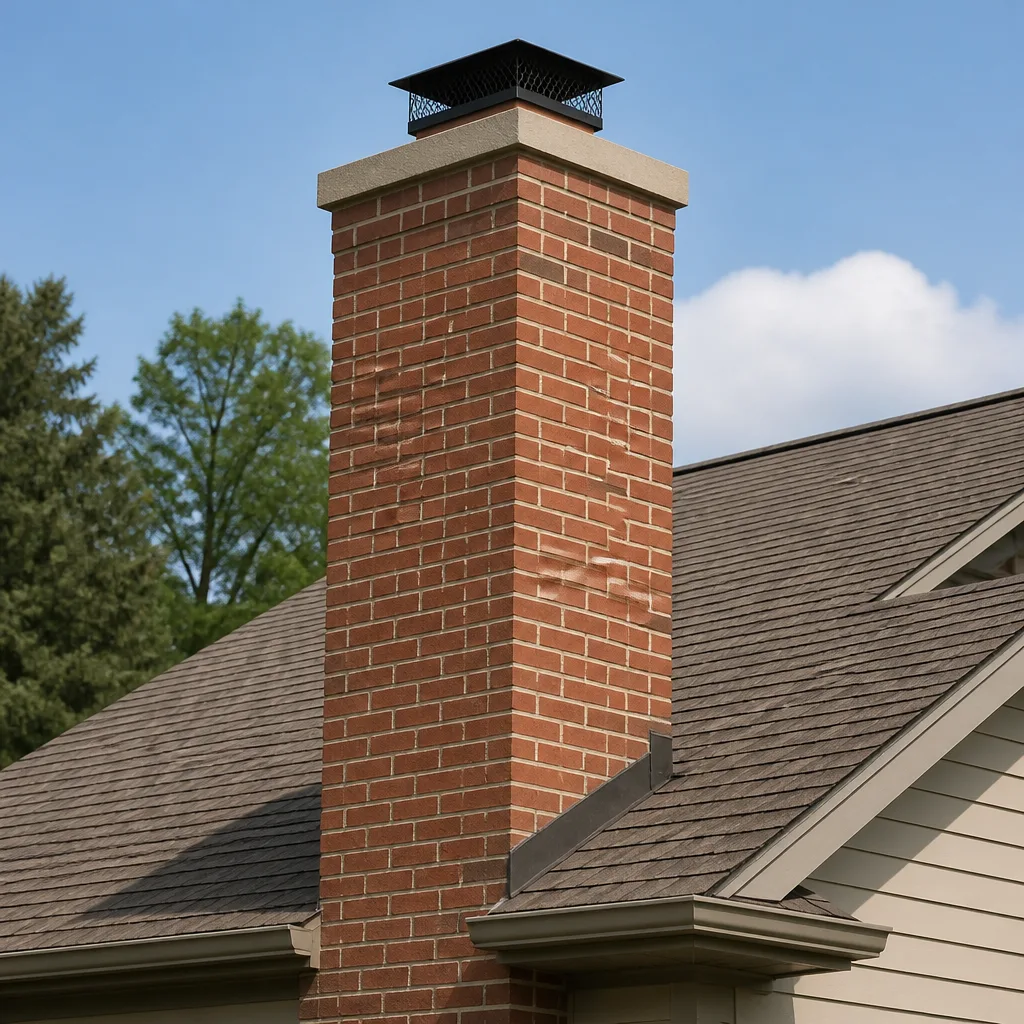 Masonry repair
 Gas fireplace service
Level 1 sweep and inspection to the NFPA 211 annual standard - flue, crown, cap, and flashing checked and photographed
Chimney sweep logs do not sweep chimneys. They loosen some creosote - which then falls where a brush and vacuum still have to collect it.
Chimney Cleaning Warning Signs: A Nashville Homeowner’s Reference Guide
Most chimney problems don’t announce themselves. The dramatic ones make the news, but in our experience the failures that cause fires and carbon monoxide intrusion usually grow quietly from symptoms homeowners wrote off as quirks of an old house. A faint smoke smell in a cold firebox. A fire that’s harder to light than it used to be. A gray stain on the ceiling that nobody connects to the chimney above it. This guide decodes those subtle signals by what they actually indicate, not just what they look like, and gives you a triage framework for deciding what can wait and what can’t.
Quick Answer
The warning signs that most reliably point to a chimney needing service are: smoke drifting back into the room during a fire, a smoky or sulfur smell when nothing is burning, dark buildup visible in the firebox, white staining or crumbling mortar on the exterior masonry, water stains near the chimney, and difficulty keeping a fire lit. Any sign involving smoke entering the living space or a gas smell warrants stopping use immediately and calling for an inspection. Call (844) 405-8628 for a free estimate.
Styles & brands we work with
- Sweep & inspection
- Caps & crowns
- Flue relining
- Masonry repair
- Gas fireplace service
Table of Contents
- Smell-Based Warning Signs and What Each Odor Means
- What You Can See Inside the Firebox
- Exterior Masonry Symptoms
- Performance Problems During Burning
- Warning Signs Elsewhere in the Home
- Creosote Types and Why They Matter Here
- The Triage Framework: Stop Now Versus Schedule Soon
- Gas Appliances and Dryer Vents: The Overlooked Warning Signs
Why Chimney Warning Signs Get Ignored
Fireplaces have been part of Nashville homes for generations, and the way people use them tends to be inherited rather than learned. Many of our clients grew up with a fireplace and adopted the habits of whoever lit the first fire in the family. Nobody ever handed those habits a manual. A smoky draft gets blamed on the weather. Crumbling mortar on the chimney gets classified as old-house character. That inheritance is one reason symptoms get dismissed, and it’s a big part of why we write guides like this one.
Then there’s the geography of the Nashville area. Our summer humidity is heavy, and our winters swing between damp forty-degree weeks and hard freezes. That cycle is hard on mortar and masonry. Creamy brick softens, joints crack, and moisture works its way in. Meanwhile, the fireplace itself sits unused for maybe seven months a year, and by the time autumn arrives the chimney has dealt with the full seasonal punishing the weather threw at it. If the chimney cap has a gap in it, all that moisture and weather intrusion has been landing on the flue all summer.
Nashville’s housing stock compounds the problem. The older homes in neighborhoods like East Nashville and 12South predate modern venting standards and often have clay tile flues that have been through many freeze-thaw cycles. Creekwood and Crieve Hall have their own mix of chimney types. Across all of them, the underlying truth holds: chimney defects almost never fail suddenly. They escalate. A small crack becomes a moisture pathway, a moisture pathway becomes spalled brick, and spalled brick becomes a chimney that risks losing its ability to vent properly. This guide walks through the specific signals and what each one is telling you about that chain.
Smell-Based Warning Signs and What Each Odor Means
Smell is the most underrated diagnostic tool a homeowner has, because it tells you what your chimney is trying to evacuate and failing. Every odor points at a specific condition. Here’s how we break them down.
A smoky smell with no fire burning
This is a draft failure, plain and simple. Air from inside the home is traveling backward down the flue instead of up and out. That reversal can come from a dirty flue, an undersized flue relative to the firebox, a house that’s too airtight, or a blocked chimney cap. It’s also one of the conditions that can precede carbon monoxide from a gas appliance or a smoldering fire entering the space instead of leaving it. A smoky smell with no fire burning is not a quirk of old houses. We recommend an inspection before the next fire is lit.
A sulfur or rotten-egg smell
Sulfur odors point to creosote that has turned acidic and is attacking the masonry. Creosote exists in three forms, and the glazed stage carries a sour, sulfur-adjacent smell that gets masked by smoke when the fireplace is in use. If you smell it strongly once the fire is out, the creosote layer is likely thick and hardened, and it needs to be removed before it burns.
A musty smell
Musty airs out of the firebox after rain usually means water has found a path in. A failed cap, a missing chimney cover, a crack in the crown, or a joint that has lost its mortar are the usual suspects. We see this in Nashville quite a bit: the seasonal moisture swings soften the crown and mortar joints until they let water through, and the musty smell is the result of a damp flue running before the season begins.
A burning plastic or chemical smell
This one is a stop-use signal. If the odor is coming from the chimney area and no fire is burning, it can indicate a chimney fire burning in the flue, overheated components, or debris igniting. Turn off the appliance if it’s gas, open a window for ventilation, and call for professional attention.
What You Can See Inside the Firebox
The firebox and the smoke chamber just above it are the two zones where most of the dangerous buildup collects. Here’s what to look for when you look up with a flashlight.
Creosote stages and what each looks like
- Stage 1: a light, sooty layer that brushes off easily. This is normal after a season of burning.
- Stage 2: a crusty, flaky black layer that clings to the tile. This demands a proper sweep.
- Stage 3: a glazed, glossy surface, sometimes pitted like glass. This stage is highly flammable and requires professional removal with specific methods.
Damaged tile liners and mortar
Look at the joints between clay tiles. Fine cracking from heat is normal on glazed liners. Widened joints with missing mortar, or a tile that has chipped away leaving a gap, is not normal and compromises the barrier that protects the surrounding masonry. A flue with broken liners can pass heat and gases directly into the home’s structure.
Smoke shelf and smoke chamber conditions
The smoke chamber above the firebox is the most overlooked zone in a fireplace. It’s where a lot of creosote collects and where obstruction often lives. We look up into it during a sweep because it catches the deposits that a firebox-only brushing leaves behind. That’s also where HeatShield resurfacing becomes relevant when the chamber has been worked over by heat and moisture for long enough.
What you’ll see at the top
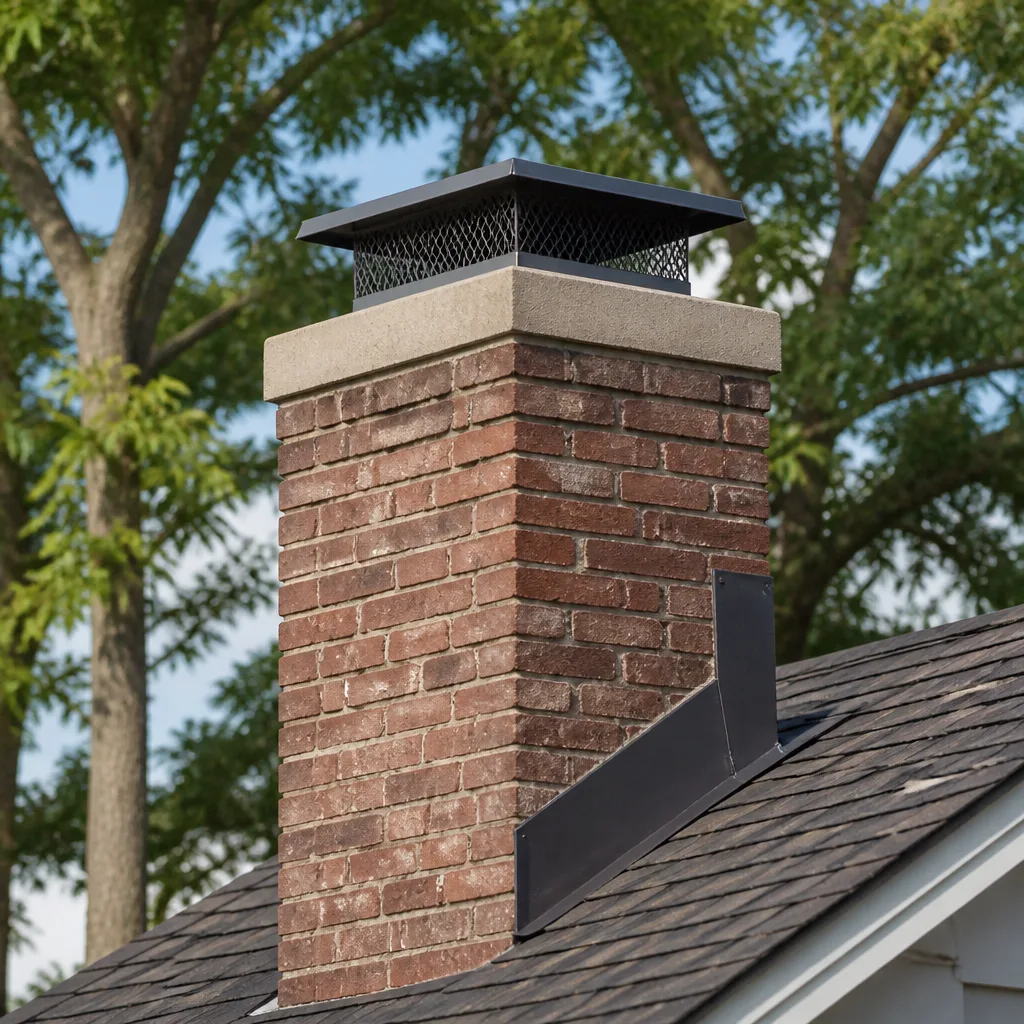
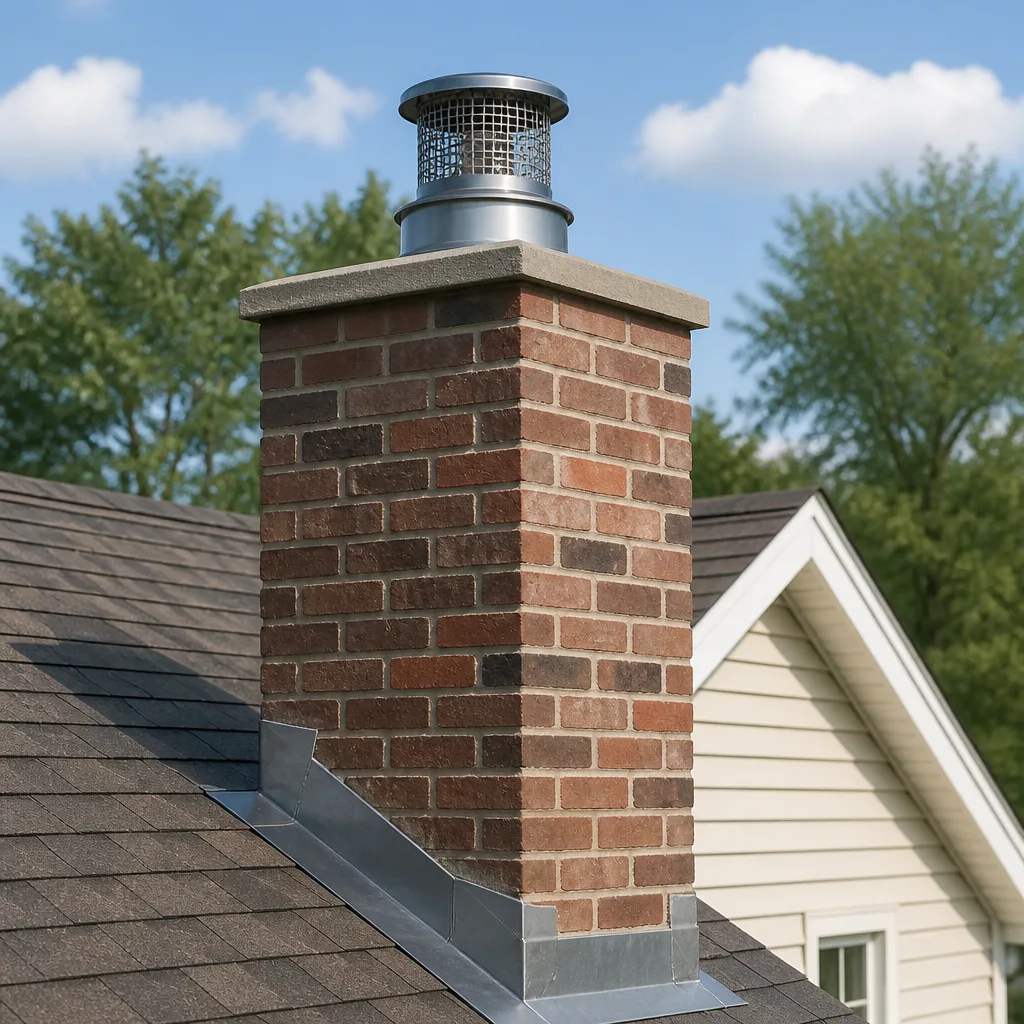
If you can safely reach the roof, look for a chimney cap in good condition, a screen with no large gaps, and a clean crown. If the cap has a gap of more than a small amount, you’re looking at a direct line for water and animals. If a chimney cap is missing or rusted through, that’s the most common cause of water intrusion we see in Nashville.
Exterior Masonry Symptoms
What you see from the outside often tells you more than what you can see from the inside. The exterior can’t lie about what’s going on beneath it.
White staining (efflorescence)
A powdery white deposit on brick or masonry often gets confused with leftover mortar. Efflorescence is actually salt that moisture has carried to the surface and then deposited when it evaporated. Mild spotting is common and not urgent. Thick, recurring efflorescence with flaking or crumbling brick underneath is a sign that significant water is moving through the masonry.
Spalling brick and crumbling mortar
When brick faces pop off or mortar joints have receded, the chimney’s structural material is being lost. This can be the result of direct water intrusion, freeze-thaw cycling, or just years of exposure. In Nashville, the late-winter freeze cycles are what really do the damage. You’ll see it most on chimneys that face the north and west sides of a home.
A cracked or sloping chimney crown
The crown is the concrete cap that sheds water off the top of the chimney. A crown with visible cracks or that slopes inward toward the flue is a funnel that sends water straight down the stack. Most crowns can be repaired or resurfaced. A badly failed crown sometimes requires more involved rebuild work. Either way, the sooner it’s addressed, the less the water can damage.
Rust on the damper or flashing
Rust on a damper or chimney flashing usually points to chronic wetting. Flashing rust is worth checking on any Nashville chimney at the point where the chimney meets the roof.
Performance Problems During Burning
How the fire behaves during burning tells you a lot about what’s going on structurally. If the fire feels like it’s fighting you, something is working against it.
Smoke rolling out of the firebox
If smoke enters the room instead of going up the flue, that’s a draft problem. Common causes include a flue that’s too cold to start drawing, a flue that’s too small for the firebox opening, a flue that’s too short relative to the house, a closed or partially closed damper, an obstruction in the flue, or a house that’s too tight for the chimney to pull. Some draft issues can be corrected with technique, like warming the flue first. Others point to a flue sizing or configuration problem that needs professional assessment.
A fire that’s hard to light or hard to keep going
Difficulty starting fires and keeping them burning slow can mean a lot of things. A cold flue, damp wood, or an obstruction are all possibilities. Debris like leaves, bird nests, or a crumbling tile can block the flue enough to choke the air supply.
Smoke smell after the house is closed up
Smoke smell lingering after the fire is out usually means the flue isn’t sealed well enough to keep negative pressure in the house from pulling ambient smoke smell back down. This is common in homes where the chimney has no top-sealing damper or a draft hood designed to protect the room from down-drafts.
Excessive smoke from the roofline
Dark, thick smoke from the top of the chimney usually points to wet wood, a flue not drawing well because of blockage and cold, or a fire not getting enough air. The fix is to correct the underlying issue, not just to open the damper wider.
Warning Signs Elsewhere in the Home
Not every clue is at the chimney. Some of the most important warnings appear in other rooms, where they’re easy to miss because nobody connects them to the chimney.
Water stains on ceilings or walls near the chimney
A brown water stain on a ceiling is the kind of symptom people file under “roof leak.” For a chimneyscape, it’s often flashing or crown failure. The path from chimney top to ceiling damage is short. Water enters through the crown, chimney top, or flashing, travels through the masonry and then lands on ceiling materials below. When that water stains the ceiling, the masonry has been wet for a while, and it’s worth having it checked.
Efflorescence on interior walls
It can also show up on the room side of an interior chimney wall, appearing as a powdery white bloom on plaster or paint. It means water is moving through the masonry and finding an exit on the inside. If you’re seeing this, have the chimney checked even if everything feels fine.
Cold drafts near the fireplace when no fire is lit
Drafts near the fireplace when it’s not burning aren’t an airflow quirk. They’re air moving back-and-forth, a sign of negative pressure and possibly a draft hood issue. This is also an efficiency problem. In a tight Nashville home with other ventilation running, that back-drafting condition can build up to the point that combustion gases don’t leave cleanly.
Water pooling or damp smells in the basement
Water pooling near the base of the chimney foundation, or a damp, earthy smell in a basement where the chimney comes through, points at masonry moisture issues. A chimney with failed flashing or a cracked crown will shed water into the home’s structure. A damp basement near the chimney is a fair reason to schedule an inspection.
Creosote Types and Why They Matter Here
Creosote is the residue left by smoke and unburned wood tar as it cools in the flue. It collects on the walls of the chimney and looks different at each stage.
- Stage 1 creosote: sooty and thin, removed easily with a brush. A seasonal sweep addresses this every year.
- Stage 2 creosote: hard and crusty, sometimes black and flaky. A brush alone may not remove all of it; specific brushes and rotary tools are used to break it down.
- Stage 3 creosote: glazed and dense. This is the dangerous one. It ignites at relatively low temperatures and acts like a fuel source inside the flue. It’s the most common fuel for a chimney fire.
Creosote collects fastest with damp, unseasoned wood, with restricted airflow, and with frequently “burning slow” fires that keep the chimney relatively cold. That’s part of why we deliver our chimney sweep as more than a surface brush: a full inspection shows what stage of creosote has built up and where it’s concentrated, so the same visit gives you a real report on the chimney condition. In our experience, wood heat is common in the Nashville area, especially following cold snaps and ice storms that pull homeowners back to the fireplace or wood stove. That habit change makes deposits grow faster than the old annual brushing schedule paced for.
The Triage Framework: Stop Now Versus Schedule Soon
Not every warning sign carries the same urgency. Here’s the framework we use when advising a homeowner.
Stop using the fireplace now and call
- Smoke entering the living space. A fire that won’t vent properly, or a fireplace that fills the room with smoke, needs to be shut down.
- A sulfur, chemical, or burning plastic smell with no fire burning. These point to things burning in the flue or unexpected combustion.
- Visible fire inside the chimney top or a roaring sound from the flue. That’s a chimney fire in progress. Get everyone out and call the fire department. Then call for a professional inspection before the chimney is used again.
- Water stains appearing quickly or spreading. That’s active water intrusion, and it can damage structure if left alone.
- Gas smell anywhere in the home. Leave the house and call your gas utility first.
Schedule an inspection within the season
- Stage 2 or stage 3 creosote. It’s a “before the next season” job.
- Interior and exterior efflorescence or staining. A sign of water intrusion worth investigating before it spreads.
- A cracked crown or spalled brick. It’s not an emergency, but the damage accelerates with each freeze-thaw cycle.
- Drafting problems that don’t involve smoke entering the home. Fire lighting difficulty is worth fixing before those problems compound.
- An annual check for any active fireplace user. That establishes the baseline and catches small issues before they become costly ones.
How a Nashville Sweep Actually Works
If you haven’t had a sweep recently, it’s useful to know what you’re getting. A full sweep has a few stages.
- A conversation first. We ask what you burn, how often, and what symptoms you’ve noticed. The history informs the inspection.
- An inspection of the whole system. Firebox, flue, smoke chamber, damper, chimney crown, chimney cap, and flashing are reviewed.
- Drop cloths and containment. A modern sweep sets up a vacuum and covers to keep the home clean while the work happens.
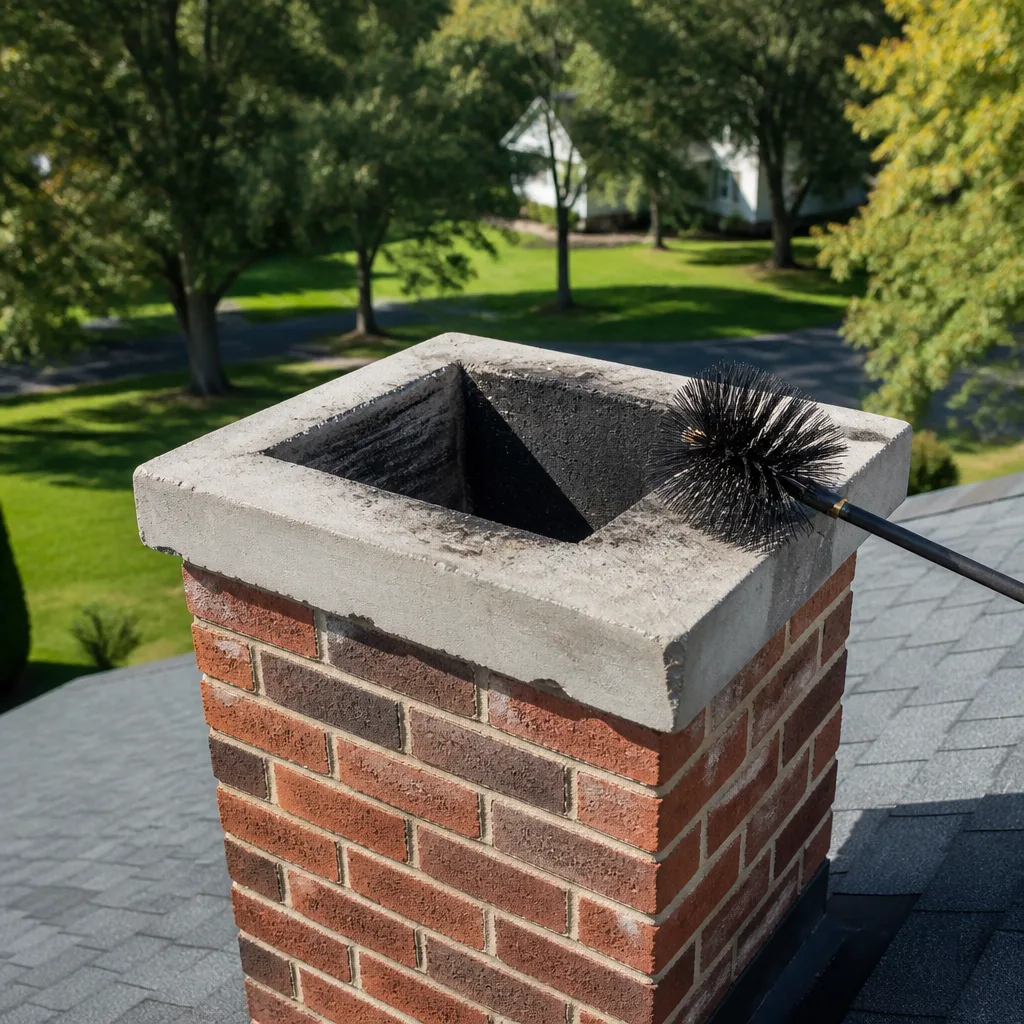
- The cleaning. Brushes and rotary tools clear the flue and chambers, and the residue is captured and removed.
- A report and photos. Any findings are documented with photos, and we tell you what’s urgent, what can wait, and what can wait a year.
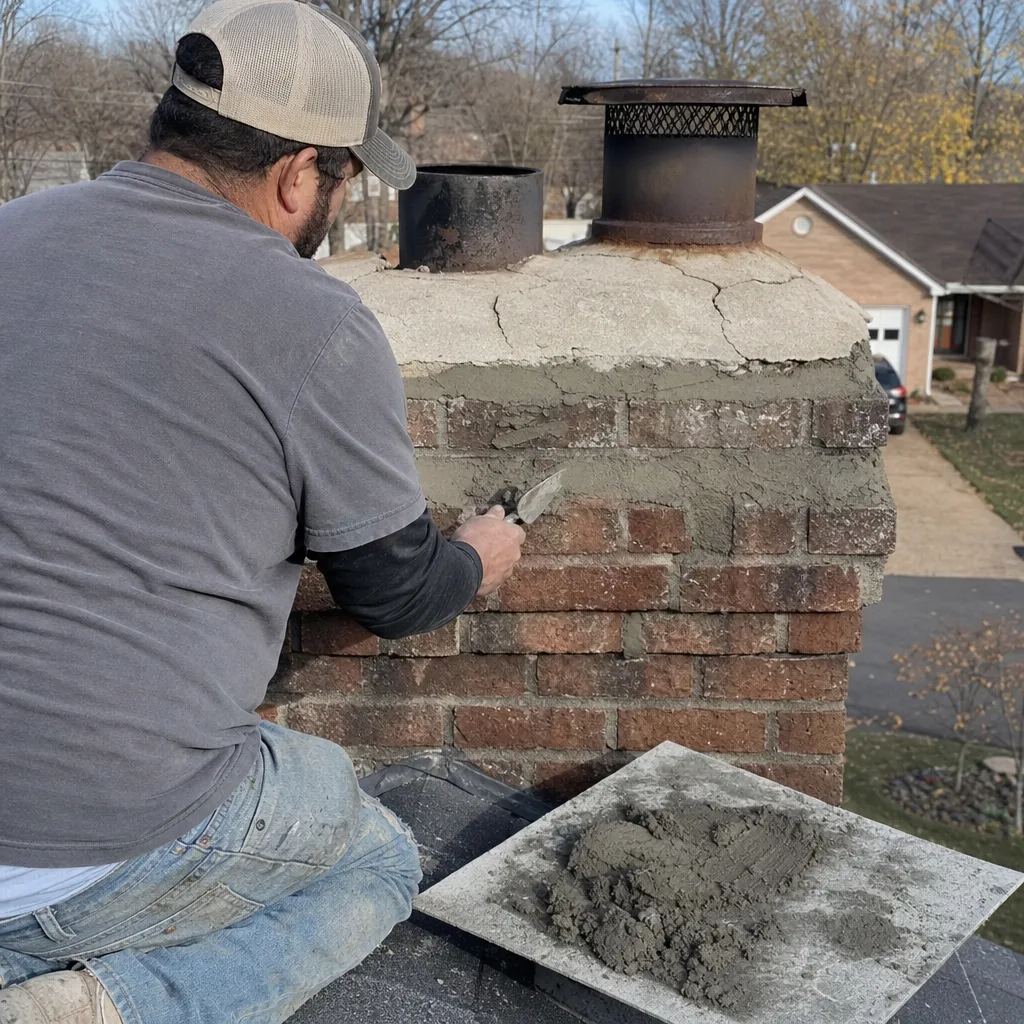
If the inspection finds a structural issue, we handle the repair rather than handing you off to a different crew. That’s the advantage of having the repair side of the business in-house. When a flue liner has deteriorated but the surrounding masonry is still sound, HeatShield ceramic resurfacing restores the flue’s ability to contain the fire and gases without pulling the whole liner. A full relining with DuraFlex flexible liner systems is the answer when the existing flue is cracked, broken, or the wrong size. Having both options means we can measure and recommend the appropriate one rather than the option that’s most convenient for us.
Gas Appliances and Dryer Vents: The Overlooked Warning Signs
Some of the same ventilation logic applies to the dryer vent, and the warning signs are just as quiet.
Clothes taking longer to dry or feeling hot
A dryer that needs more than one pass to get clothes dry is often a partially blocked vent. Lint is building up somewhere in the run, and with it, heat. Heat that can’t escape is the condition that turns a clog into a fire.
A hot dryer body or a musty smell in the laundry area
A dryer body that feels hot to the touch is a sign of restricted airflow. Some amount of warmth is normal, but the whole cabinet getting hot for an entire cycle usually means the exhaust path is blocked inside.
Lint buildup behind the dryer or at the vent cap
Lint that collects on the exterior wall or vent cap may indicate a loose vent fitting or a blockage further along. Lint is the fuel; the restricted airflow is the heat source that ignites it. That combination is why dryer vent cleaning isn’t a “make it work better” task; it’s a fire-safety task, and we include it with our dryer vent cleaning as a core service rather than a tack-on. Venting components from Famco and Olympia Chimney are part of what we stock, because the rerouting is often necessary when the issue is a long or improperly run vent line.
See the difference
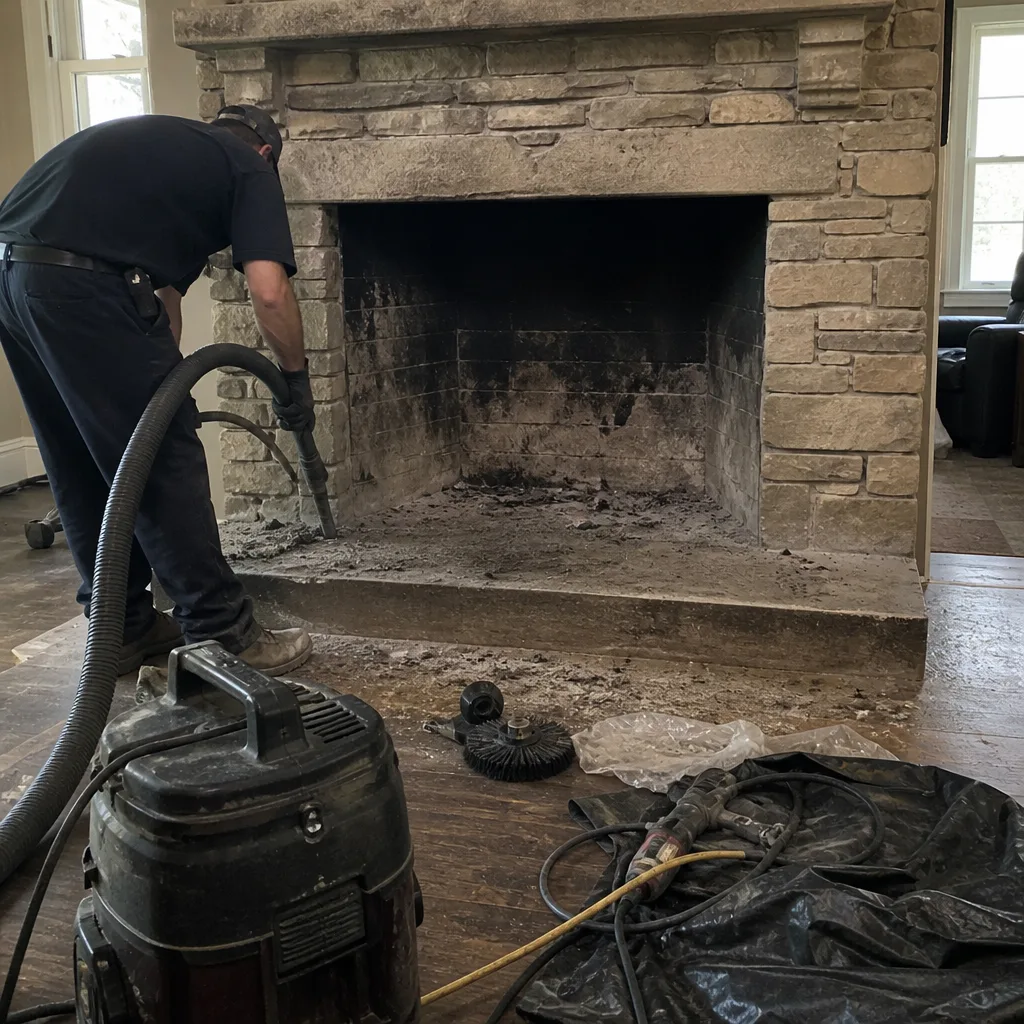 Before
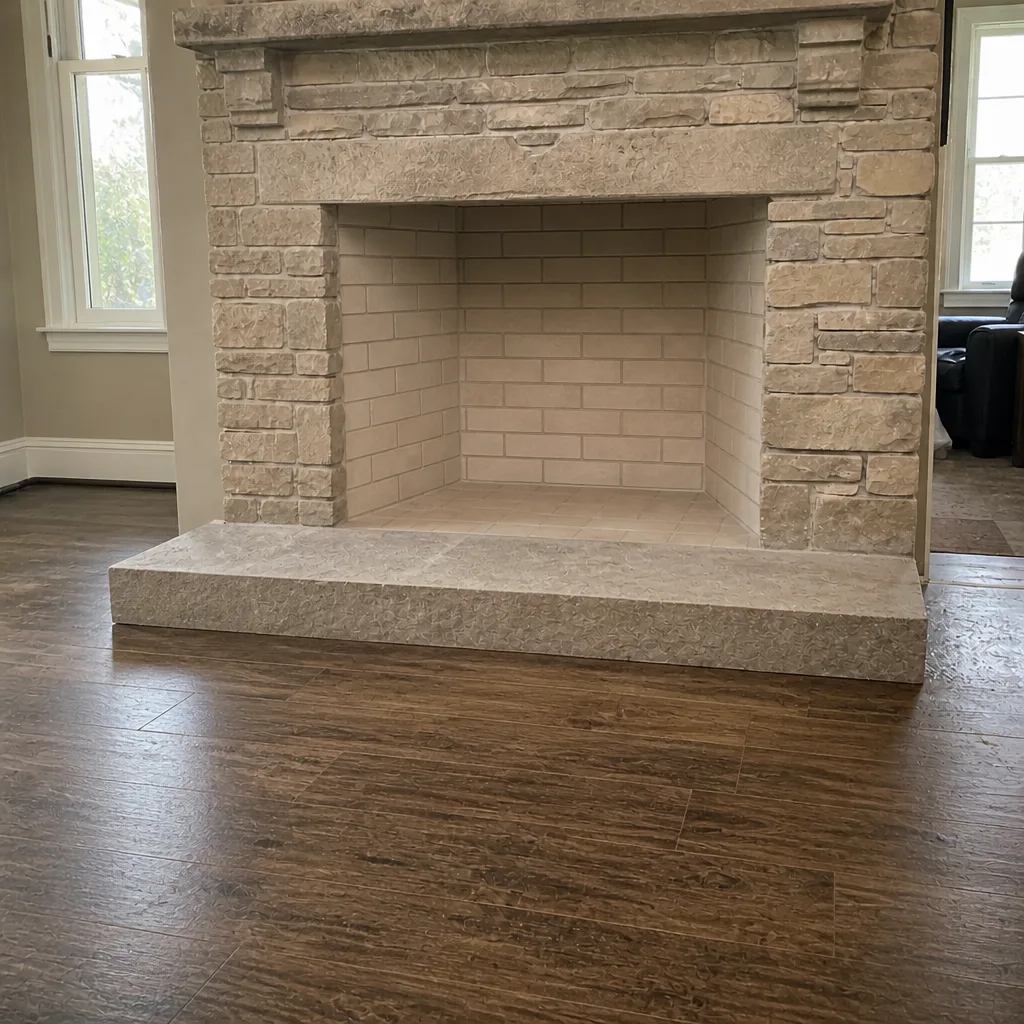 After
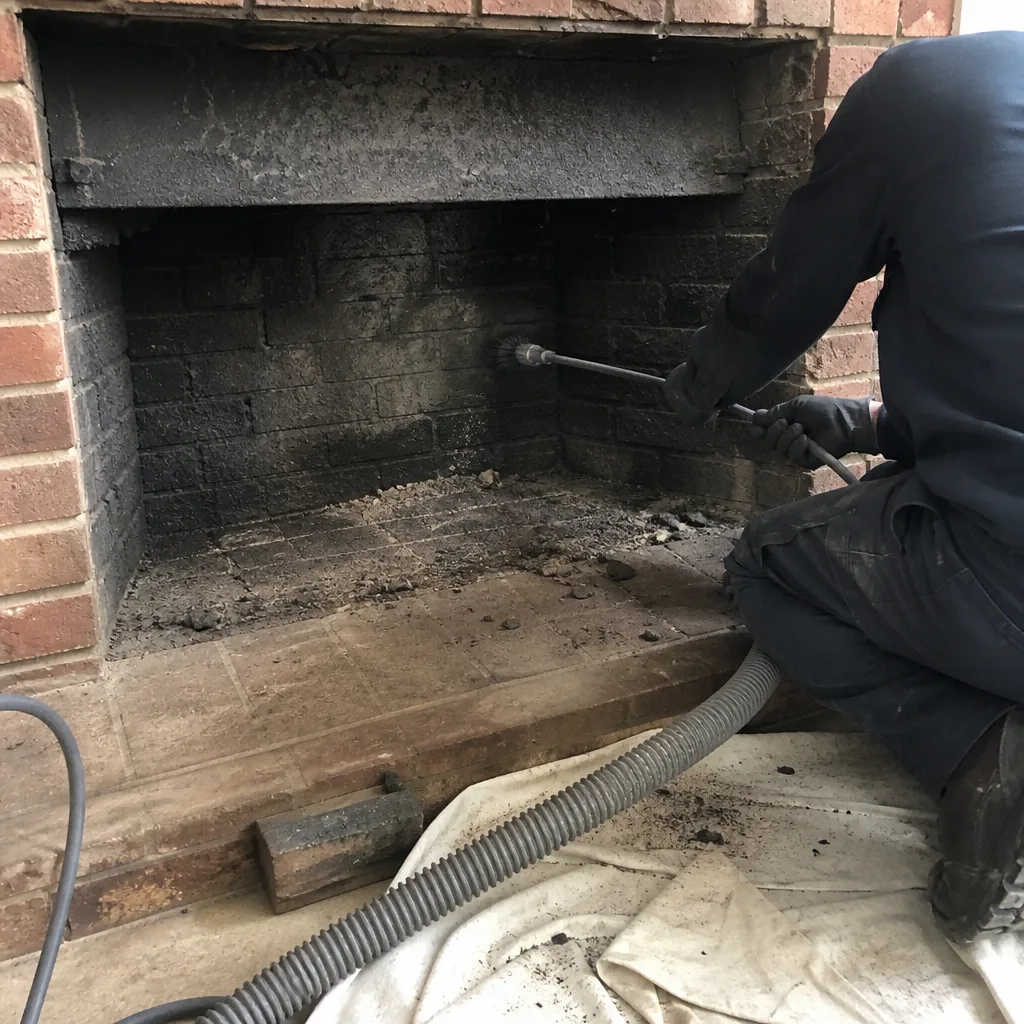 Before
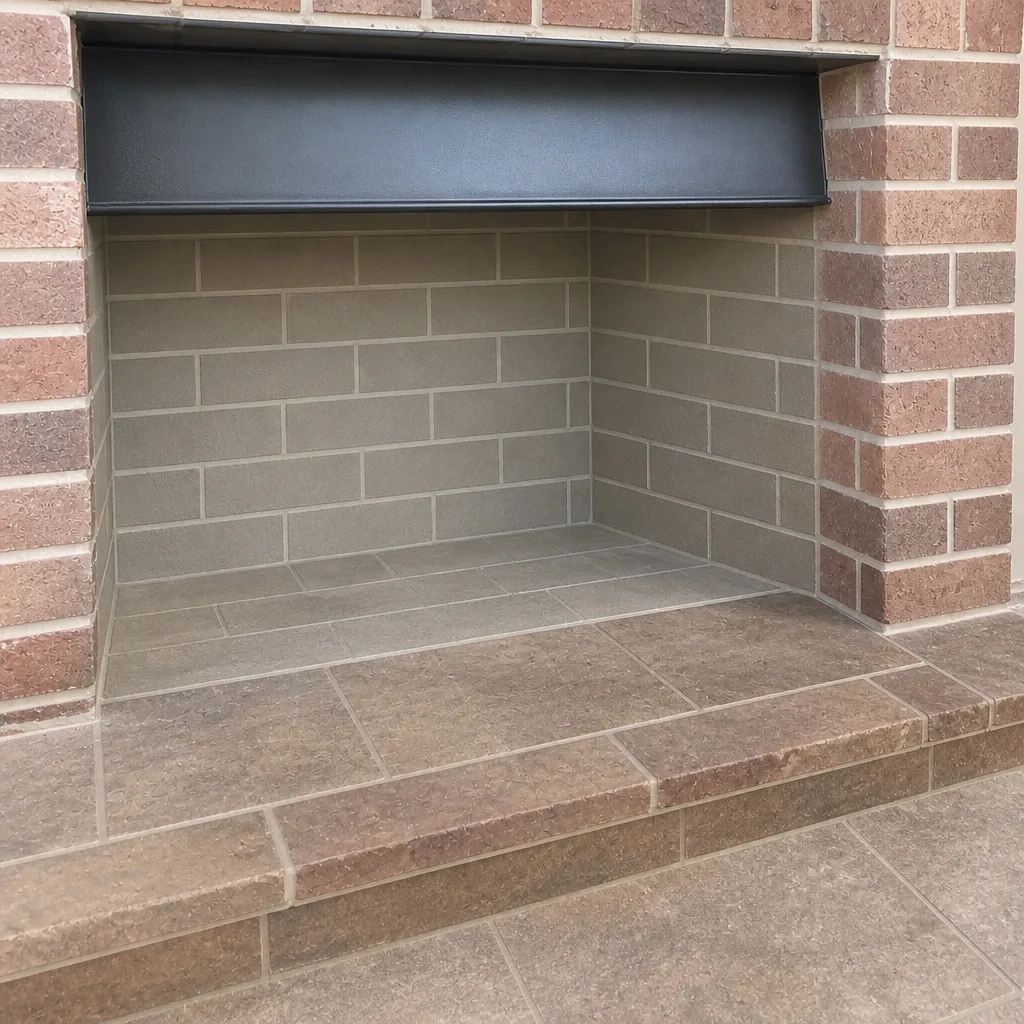 After
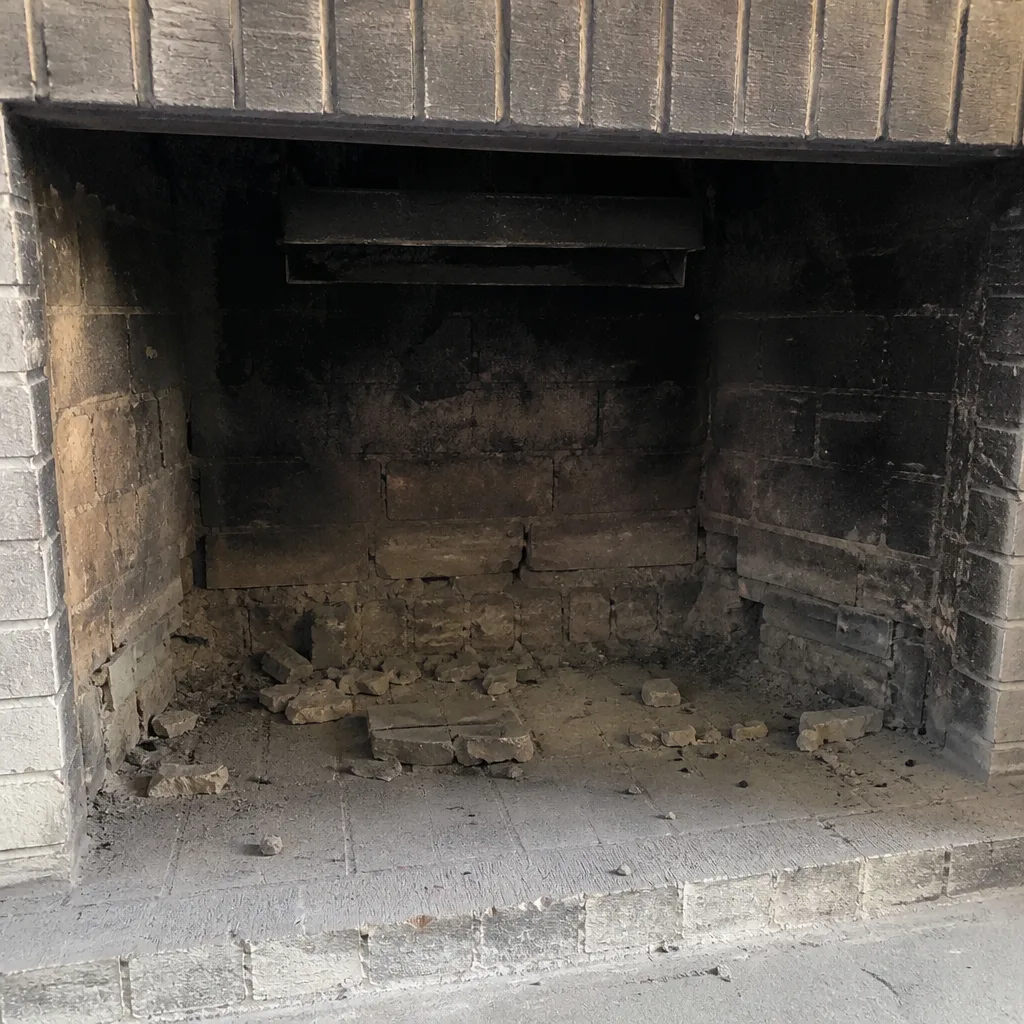 Before
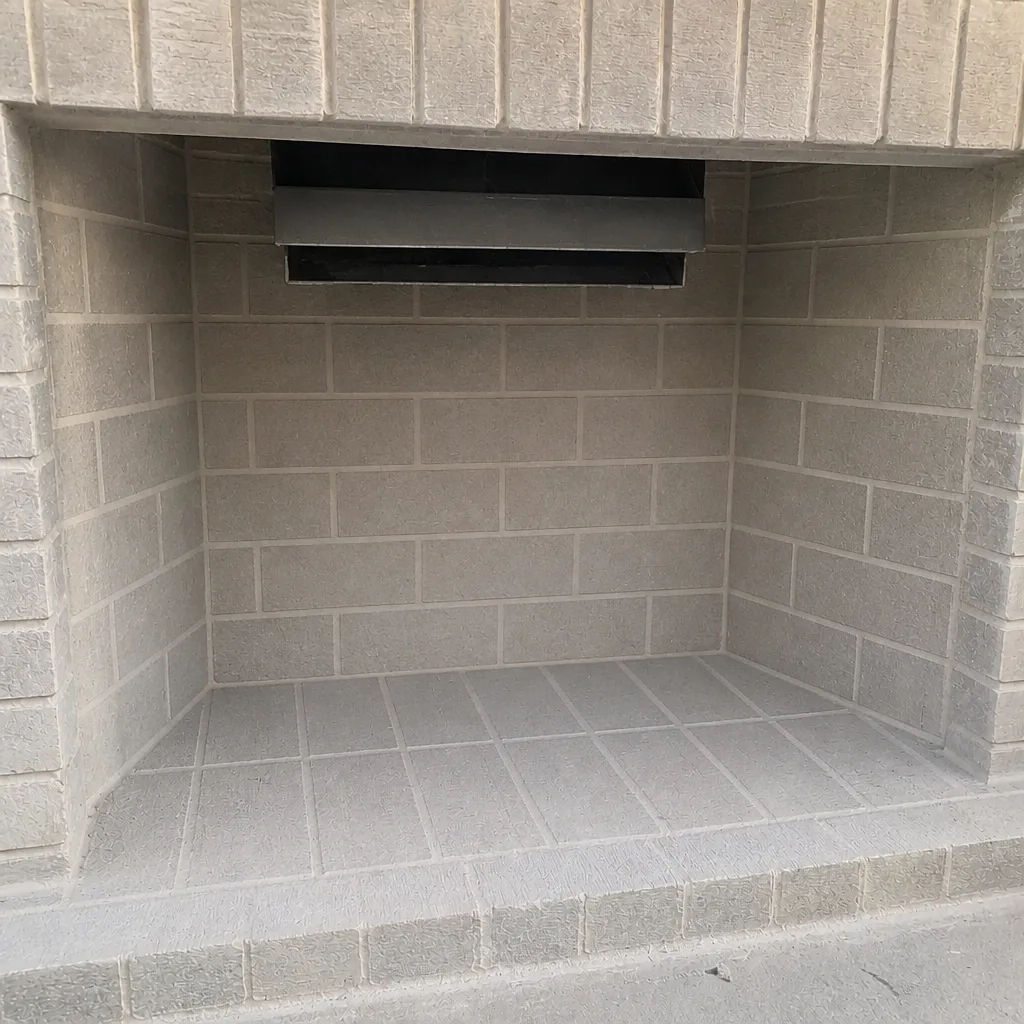 After
Common Mistakes to Avoid
- Assuming a smoky smell is normal. It isn’t. It’s a draft failure, and it can point to carbon monoxide pathways. Treat it as a reason to inspect.
- Burning in a fireplace with a damaged flue. That’s the pathway to structural fire risk. If the inside looks wrong, don’t light it.
- Stacking up burnt wood against the firebox. It may seem harmless, but stacking debris in the firebox blocks airflow and hides what’s going on inside the flue. Keep the firebox clear.
- Ignoring efflorescence. White staining on the outside of the chimney isn’t decorative; it’s how masonry tells you that water is moving through it. If it recurs, have it checked.
- Thinking a sweep is all you need. A sweep removes creosote, but it doesn’t diagnose structural problems by itself. If there’s a crack or flaw, it has to be found.
- Waiting for visible damage. By the time a ceiling stain shows up, water has been moving through the masonry for a while. The earlier a chimney is staged, the less the damage compounds.
- Not checking the dryer vent between cleanings. Dryer lint fire risk is present in any Nashville home. Annual vent checks catch the buildup before the heat finds it.
When to Call a Professional
Call a professional if you’re closing the fireplace for the season and haven’t had a sweep yet. Call if you’ve noticed any of the warning signs above, even if you’re not sure whether they matter. Call before you use a fireplace that hasn’t been inspected, especially if you’ve just moved in. Call if the chimney shows signs of water staining, if the unit has damaged masonry, or if you’re noticing any combustion odor. And call if you have a gas dryer, because the venting needs to be assessed for both lint buildup and the routing that runs through it. Many of the stubborn cases we see in Nashville could have been addressed with a single free estimate. We’re the ones to call for a free estimate: Nashville Chimney Cleaning offers free estimates in Nashville, and we can be reached at (844) 405-8628. We answer 24/7. Fast dispatch from 7am to 7pm, Sunday through Friday.
Frequently Asked Questions
The most common signs are visible creosote buildup in the firebox, a smoky smell when the fireplace is unlit, smoke entering the room during a fire, and difficulty keeping a fire going. Any of these means the flue isn’t working as it should. Call (844) 405-8628 for an exact quote; estimates are free.
No. That smell usually means air is traveling backward down the flue and into the house. This is a draft problem, and draft problems are one of the conditions that can precede carbon monoxide intrusion. It’s worth inspecting before the next fire. Call (844) 405-8628 for an exact quote; estimates are free.
Most manufacturers and trade bodies recommend an annual inspection, with a sweep whenever the buildup reaches roughly an eighth of an inch. In humid Nashville with heavy seasonal use, we often see more frequent cleaning needed for homes that burn wood frequently. Call (844) 405-8628 for an exact quote; estimates are free.
Chemical logs aren’t a substitute for a sweep. They can loosen light soot but do not remove glazed creosote or correct structural problems. A sweep with a camera and a report is the honest way to know what’s really there. Call (844) 405-8628 for an exact quote; estimates are free.
A chimney fire occurs when the creosote lining the flue ignites. You may have heard a roaring sound and seen a chimney efflorescence or a popping sound. Sometimes the evidence is not obvious from outside. If you suspect a fire has happened, have the chimney inspected before lighting again. Call (844) 405-8628 for an exact quote; estimates are free.
Smoke backing into the house, a strong chemical or plastic smell with no fire burning, visible fire near the chimney top, or a spreading water stain all mean stop until inspected. Call (844) 405-8628 for an exact quote; estimates are free.
A rain-triggered smell usually means water is entering through the cap, crown, or a joint and mixing with soot and creosote inside the flue. That combination creates the musty odor. Addressing water entry and having the chimney inspected is the fix. Call (844) 405-8628 for an exact quote; estimates are free.
Yes, if you have a gas dryer. Both are venting systems with the same fire risk pattern. Having both evaluated in a single appointment saves you a separate call and is how we prefer to work. Call (844) 405-8628 for an exact quote; estimates are free.
The Bottom Line
Chimney warning signs don’t show up all at once. They build slowly, and the subtle ones – a faint smoke smell, a white stain on brick, a fire that needs more coaxing – are usually the most useful. If you’re noticing any of them, take them seriously. If you’re not, an annual sweep provides the baseline. We handle sweeps, dryer vent cleaning, and structural chimney repair with the same hands, and we use the materials the trade trusts, like HeatShield and DuraFlex, when the fix calls for them. Call (844) 405-8628 for a free estimate. For chimney cleaning in Nashville, Nashville Chimney Cleaning is the number to call, and we’ll tell you what’s actually going on before anything else gets scheduled. We answer 24/7. Fast dispatch from 7am to 7pm, Sunday through Friday.
Written by the team at Nashville Chimney Cleaning.